HOW TO BE INQUISITIVELY STUPID: GRAD TIP #3

Picture

Identity theft is not a joke, Jim!
You may be thinking, “Surely, that can’t be right! Why would you tell me to be stupid? What do you mean by doing it inquisitively?”. Basically, what I’m trying to say is ask the stupid questions.

Sometimes you need to learn to push against that risky, scary feeling that you might embarrass yourself by asking a question that maybe everyone else already knows the answer to. Maybe everyone does already know the answer, maybe they don’t. But you could never know the answer if you don’t embrace feeling stupid occasionally and just ask the damn question.

​We’ve all been there:

Something comes up in lecture or conversation or in a group meeting – whatever it is – you have the moment: “wtf does that mean?”

Being able to learn and grow as an expert in your field sometimes requires a stupid question. You need to learn to just stew in the fragility and vulnerability. You know what I mean. Something said confuses you and you feel the stupidity (feeling!) rise in your stomach like an involuntary burp. You want so bad to understand this content but you just. can’t. raise. your. hand. I’m here to tell you (again) that you are not alone. ALL of us have felt this way from one time or another. Some experience it more frequently than others (me) and that’s okay. Because if you know where your weaknesses are and are willing to learn how you can improve on them, then you’re gucci, baby! And ultimately, your work won’t suffer. Sure, you didn’t know the answer. But you asked what it meant and now you know

In short, if you want to be successful, but you need a key piece of information, you need to learn to ask for it and not worry about the looks or judgement. I AM NOT SAYING THERE IS NO SUCH THING AS A STUPID QUESTION. There absolutely is such a thing but – what I am saying is –  sometimes the stupid questions are just mandated. You have holes in your education. We all do. We have to be comfortable with uncomfortably filling those holes, for the sake of our research. A research endeavor that is well thought-out and well understood, is one that will flourish with meaningful results.
……And sometimes that requires asking a stupid question.
If you go and talk to people I work with, I can tell you, they won’t say I never ask stupid questions or that I have never had a stupid moment but, they also cannot say that for themselves. I’m trying to remind you that people will judge you no matter what. They will judge you for things you can’t control and things of which you can control. They will judge you for things you never even recognized in yourself. They will judge you whether or not you asked the dumb question.
My advice: Be the stupid person. They have to kick you out for worse things than asking stupid questions. 
Picture

Literally every graduate student ever. Especially that first semester.

EUROPE

Visiting Europe for the first time was a way of celebrating passing my written qualification exams in January, passing my Master’s thesis defense in April, AND earning (and later accepting) a pre-doctoral fellowship at the Harvard-Smithsonian Center for Astrophysics, specifically funded by the Chandra X-ray Center, in May. I think I more than deserved a vacation, right? Especially a grand adventure! So, Noah and I bought tickets to visit my good friends, Kirsten and Jacob in Belgium. 
Picture

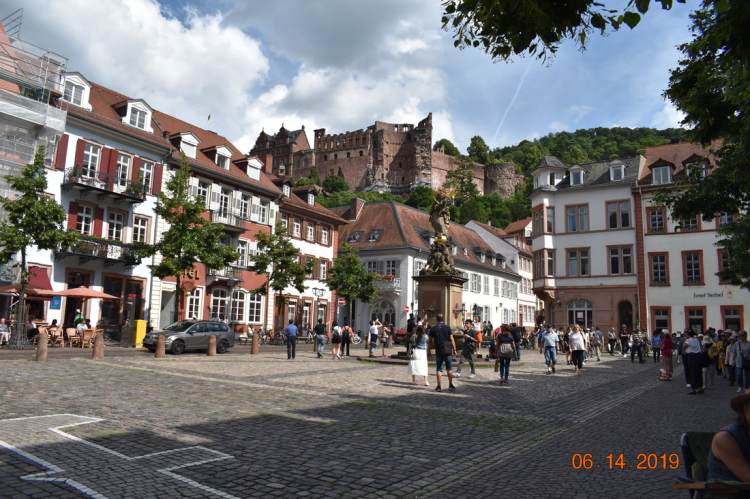
Heidelberg, Germany! Our first adventure altogether. Pictured is the town center with a beautiful view of the Heidelberg castle.
Picture

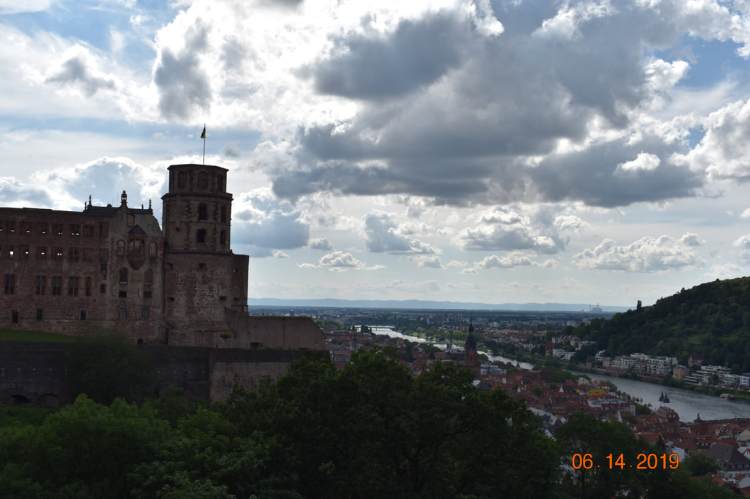
View at the top by the Heidelberg castle, over looking the gorgeous town that hugs the Neckar River.
Picture

The Aare glacier waters that run through Interlaken, Switzerland.
We were in Europe for two full weeks. This was Noah and I’s first time ever leaving the United States (at the ages of 25 and 27!). We managed to visit SEVEN countries:
1. Belgium

  • Cities: Lens, Brugge, and Brussels

2. Germany

  • ​Cities: Heidelberg

3. Switzerland

  • Cities: Interlaken, Grindelwald, and Spiez

4. France

  • Cities: Annecy

5. Czech Republic

  • Cities: Prague and Karlovy Vary

6. Netherlands

  • Cities: Amsterdam

7. Spain

  • Madrid

Below I outline my favorites and highlight areas I think everyone should visit (!), and some tips for navigating Europe.

My favorites: Heidelberg, Switzerland, Prague, and Amsterdam
Picture

Grindelwald, Switzerland! This was at the location of the ride Toboggan. You ride on a fast slide through the Swiss mountains! It’s great fun.
Picture

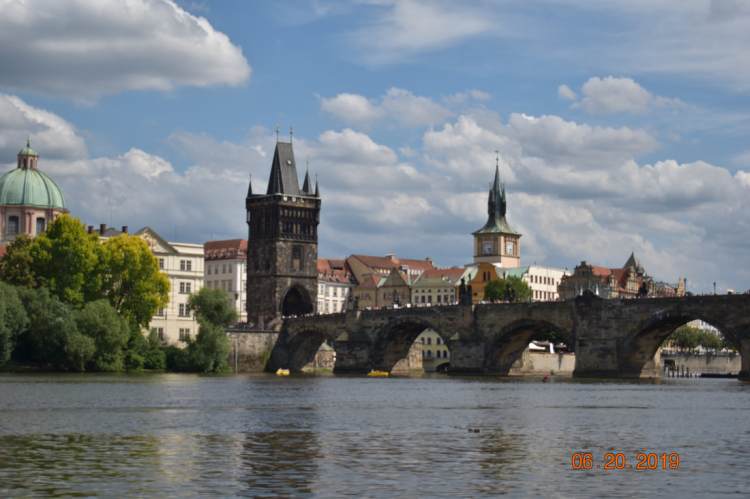
The Charles Bridge in Prague. The bridge was finished in the 15th century and crosses the Vltava River.
Heidelberg: Gorgeous town, rich in history (like the rest of Europe pretty much) and features an ancient castle dating back to at least 1214. We stayed at a small hotel called Hotel Dier Johresjeiten with its own intriguing background, itself dating back to 1690. The hotel staff were knowledgable about the area and were very kind!

  • Average price to visit here (1 $ being cheap to 5 $ being very expensive): $$ — not bad. 

Switzerland: Interlaken is absolutely beautiful! Everywhere we went, we were surrounded by towering mountains and glacier streams. This includes Spiez and Grindelwald. We visited Harderkulm, a peer in the mountains nearly a mile above sea level, that overlooks Lake Brienz and Lake Thun, and has a stunning view. In Grindelwald, we went up to ride the Toboggan! It was so much fun! Everyone should do that when visiting Grindelwald. 

  • Average price to visit here: $$$$ –the Frank is comparable in value to the US dollar but the cost of living is much higher. Four of us stayed in a one room AirBnB that shared a bathroom with another hotel room that was walking distance from the train station and to the city center for two nights: nearly $500.00. 

Prague: The capital city of the Czech Republic has remarkable architecture with winding roads that all stream from the city center where the astronomical clock sits. The cuisine is divine! You feel like a king when you dine in Prague. 

  • Average price to visit here: $ — A big perk for me about Prague was the prices!! You could buy a decent beer for $1.00 at pretty much any convenience store. You could buy a fabulous sausage dish and a latte for $10. We did one of those tour buses for $25! It was awesome. Plus people are really nice. We have some very interesting stories from this city…. One being we stayed on the fourth floor of a hotel in downtown. Every night you would hear SWARMS of men stumbling in the streets, belting out famous songs (We’re not gonna take it and Don’t you love me baby to name a few)  at the top of their lungs as they made their way to the next bar. I was still recovering from jetlag at this point so I wasn’t necessarily annoyed by it. In fact, I thought it was rather funny. If I can’t sleep, why not listen to Prague at night?
Picture

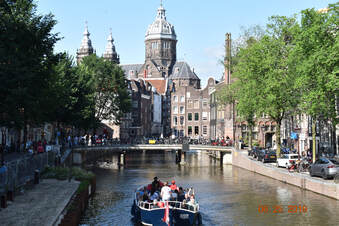
Amsterdam, Netherlands. Beautiful and captivating in architecture, culture, and history.
Picture

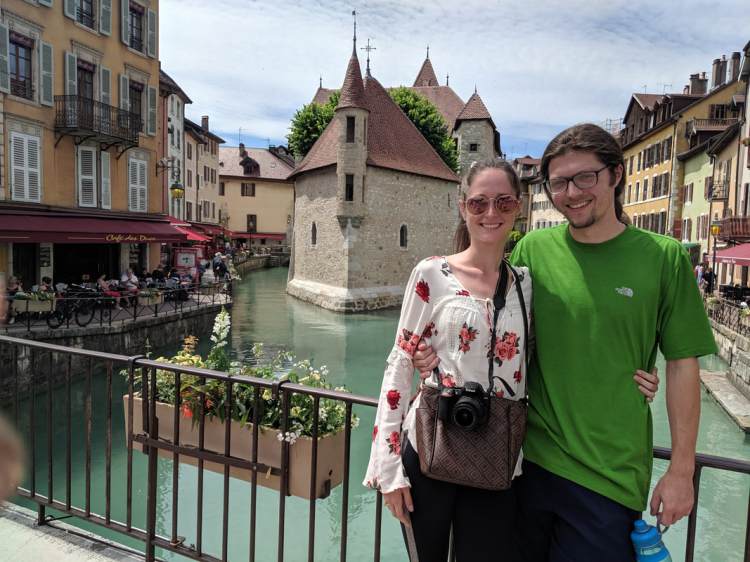
Annecy, France. A brief trip but was lovely nonetheless. Took a dip in the lake and appreciated the clear blue water.

         Must sees!

  • Heidelberg Castle in Heidelberg, Germany
  • Brugge (great beer, good prices!), Belgium
  • Toboggan ride in Grindelwald, Switzerland
  • The astronomical clock in Prague, Czech Republic
  • Harderkulm in Interlaken, Switzerland
Tips to follow in the next post. There are a few apps that saved me while traveling in Europe on a budget and with limited cell phone service! Other things, like traveling with a group and planning on a budget, I will try to provide advice on next.

Part II: The Awkward Years

That’s right ladies and gentleman, here we go with the most awkward time of everyone’s lives: middle and high school. My stomach twists to think about it! I was so weird! I succumbed to insecurities in middle school that drove a lot of what I did. That didn’t go away in high school either but high school wasn’t that bad I guess. I feel like I was a normal student but at the same time not. Most memorably, I met my best friend in the whole world in high school. Teresa and I were attached at the hip all through out high school and we have been close friends for over a decade now. While I’m studying in Clemson, SC she’s out in Colorado maybe snowboarding, building ice castles, teaching little kids how to snowboard, playing bass guitar, just you know, a regular Thursday for Teresa. But, if it’s the summer time, she’s in Alaska! She is an actual nomad and people should study her for secrets of the nomadic way of life (lol). But okay, that’s not why we are here.

We’re here because I am going to try to convince you that anyone can study physics for a living. I’m not special, I don’t have a gift, none of that. I was never good at the sciences or in mathematics. They were consistently my worst subjects in grade school; from middle school up until I graduated high school. By the time I entered my junior year of high school, I was in Pre-Pre-Calculus (Yes, two Pre’s), not understanding or retaining a lick and scraping by on a D in the class. I just barely passed the class by the end of the year and by senior year, they told me I finished all of my math requirements for the advanced diploma. So, I said, cool. Not gonna take math if I don’t have to, right? So, I didn’t. I didn’t take physics either. I took oceanography my senior year. All I remember from that class is how sweet the teacher was and how mean classmates were to her.

In 2012, I graduated from high school with highest honors and an advanced diploma. I had not taken any calculus or physics courses up to this point (I will realize in college that I had no study skills. How I got a 3.5 in high school still bewilders me). I was very good at failing math and science classes so when I entered Radford University as a freshman, it was not a thought at the time that I would pursue physics. I enrolled as “Undeclared”.

Picture

Teresa and I at our first Badfish concert (we went to five!). This is circa 2013.
581289-462112987134483-931309817-n.jpg

Our 2012 high school graduation.
Picture

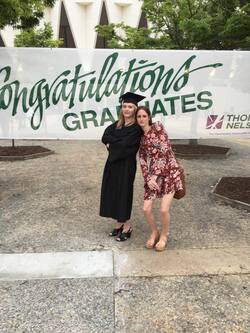
Teresa’s 2016 college graduation.

TIME MANAGEMENT: GRAD TIP #2

Hello all! My second grad tip for surviving graduate school is time management. As I’m typing this I am avoiding doing my math project and beginning my comprehensive list of pulsar wind nebulae (err…Sorry, Dan. I’ll do it next, I promise) but, that’s okay! I have my schedule worked out to include the days when I’m able to knock out a bunch of stuff and the days where I hit a lull or road block one way or another (that’s today). I don’t procrastinate so if I can’t get to an assignment at a certain time that I’ve aimed for, it’s okay. I’ll get to it later because I have time. So, speaking about time. Let’s talk about how to manage it. I’ll share my three secrets (omg!) to managing time in a manner that allows you to be efficient and productive and, if implemented right, you have plenty of time left for you and your body (eat a decent meal, maybe?).

My three tips to getting the most out of your normal work/school day:
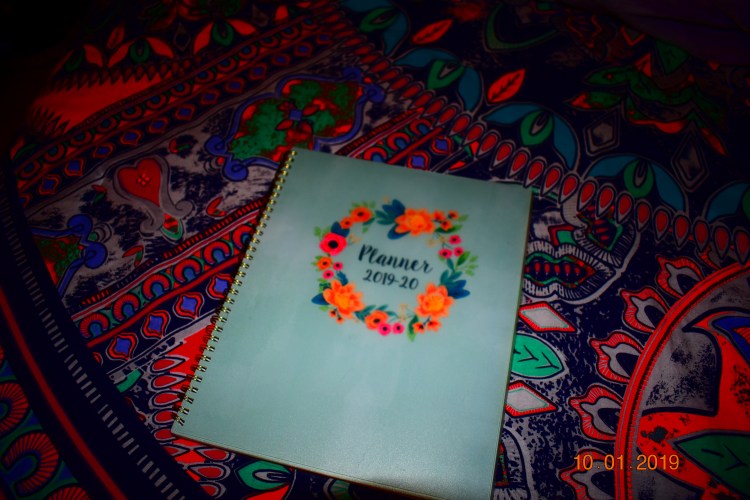
1. Keep an agenda or day planner. I use this one.

DSC_0033

The agenda I use.
DSC_0036

My Oct 1 day schedule (as you can see, I have not yet done two tasks. I’ll do one after this post and the other tomorrow!).
  • Make a list of all the things you need to do for that week and then give each day a portion of those tasks to complete. Be sure to consider deadlines!
  • It’s okay if you can’t complete all of the tasks you designated for a specific day. Simply highlight out the tasks you were able to complete and move the leftover tasks to either the next day or another day in the week (if this assignment’s due date allows of course).
  • Balance the hard tasks vs. the smaller, less time-consuming tasks. Don’t schedule a bunch of hard, long, math problems to do all on Wednesday. Layer it throughout the week so you don’t spend too much time hating yourself all at once.

​To the left is an example: My weekday schedule. ​You can see project I is on Monday, Tuesday, and Wednesday. This is both because I couldn’t get to the project today and also because it’s a project so it will require more time than one weekly time slot.

PROS: Get your shit together. ​

CONS: Never remember to do another thing in your life without the agenda telling you.
2. Stay organized. If you don’t have to spend 15 minutes every morning looking for your keys, you have that time to get to work and maybe get a better parking spot! (Or drive for 30 minutes on campus desperately looking for an available space……WHY IS EVERY COLLEGE LIKE THIS?!). Here are some things I do to keep myself organized:

  • You know those deep clean binges you go on occasionally where for a small window of time everything in your life is just about clean and in a proper place? (I wonder if this really does apply to most of us? I think I’m smelling another survey at the bottom of this post). Anyways, start there. Then, practice cleaning up after yourself. I’m seriously not trying to be rude! But we all subconsciously misplace things and generally clutter things up because we forget to put them back. I still have to practice the habit of cleaning up after myself. If you stay consistent, it’ll eventually become a habit and you won’t have a cluttered house to anxiously and aggressively clean when you’re feeling panicky or spend those 15 minutes looking for your wallet or your phone.
Picture

Sorry, Kirsten.
OOOR, you can be like me and artfully place a bagel on a paper towel on top of your cell phone while visiting friends in Belgium and then freak tf out for 20 minutes about how I probably left my phone in a Belgian’s car because I can’t find my phone and then later go to eat my bagel and then… well, then I realized I needed to apologize for my attitude. 
PROS: You will lose stuff less and waste less time cleaning, organizing, and finding misplaced items.
CONS: Requires some self discipline and habit forming.*

*Is this really a con tho?

3. SLEEP. My dear friends, the kindest gift I can give to you is to convince you to get enough sleep. A clear, working, productive mind is one that is well fed and well rested. Sleeping enough and generating a good sleep routine can help you start the day feeling ready to take on the tasks you designated specifically for that day. A clear, focused mind is the best mindset to be in when you need to have your A game. 
PROS: You get more sleep! 
Cons: DNE (does not exist)
Picture

Don’t be this guy.
Through keeping good time management by following these tips, you could virtually say goodbye to:

  • All-nighters (I’ve literally never pulled one. I’m in bed by 9pm. If it’s a particularly stressful day maybe 11pm. Lol)
  • Missing deadlines (at least minimize the occurrences, that is.)
  • Missing meetings or appointments
  • Sloppy assignments turned in with a lack of understanding (because you were rushing!)
  • Procrastination

STAYING SANE IN GRAD SCHOOL: GRAD TIP #1

A recent article by The Atlantic discusses the mental health crisis currently plaguing higher education programs everywhere. The article is called Graduate School Can Have Terrible Effects on People’s Mental Health.  I don’t know about you but when I first read that title I thought “No sh**!”, because by the time this article circulated around the internet to my computer screen, I was two years deep into the physics PhD program at Clemson University. There is a lot to freak out about when you get into graduate school imo. About 30% of it is just you overreacting but the other 70% is the actual demand of being a graduate student (and in most STEM fields, add that you are cheap labor, too).

Common stressors in graduate school include:

  • Many PhD programs require you to take up to three (or maybe more depending on the program) core courses your first one to two years alongside your classmates. Competition is high here even though you are among friends and peers. People are really cocky when they’ve reached this stage of their life and it can be hard to not get intimated.
  • Huge workload to adjust to: full time classes and sometimes, full time teaching, and/or full time research duties. Some PhD students legit work like 70+ hours per week (however, I will create another post to discuss my life hacks at time management, they’re bomb – just by the way).
  • Lots of public speaking. Both in front of your peers and potential supervisors and in front of the undergraduates you may teach. This last one can be pretty awkward. For example, I began teaching undergraduate introductory astronomy labs just months after graduating from undergrad myself. It was a struggle for me to find the right balance between being a lab instructor and being their peer (At first, I went super hard and tried to get everyone to call me “Ms. Eagle”. Let’s just say that didn’t pan out.).
  • Research presentations. This part was particularly horrifying for me as presenting high energy astrophysics research takes some practice. Presenting science is actually a lot harder than you might have guessed! Just knowing you are giving a talk about a field you are in new in, in front of faculty that have dedicated decades to this field already, is enough to make the pit in your stomach churn.
  • Imposter Syndrome: Where you feel like no matter how hard you work, how many awards you earn, how many accomplishments you make, you are still somehow “faking it”. You feel as though you have managed to fool everyone around you into thinking you are this rightly peer who deserves to be here but deep down inside, you feel like a huge F A  K E. I struggled with this heavily when first entering graduate school, and I continue to battle with this every day.

Between classes, studying, homework, teaching, grading, running experiments, reducing data, interpreting results, collaborating, meeting with supervisors, meeting with students, writing grants and proposals, practicing research presentations (etcetcetc!), where on Earth can a graduate student find time to cook his\herself a decent meal? Read a book for fun? Exercise? Have a family (sorry, I can’t provide advice on that yet)? Have a pet****? NAP?!
*****and be a good, responsible pet owner. 

I haven’t even mentioned other factors that negatviely impact some graduate students like finances and socioeconomic status. Balancing work and personal life as a graduate student can be even harder if you already struggle with mental and physical health or lack organizational skills, study skills, and time management skills. It could literally make you or break you to have good habits already established when you enter graduate school. It can be one thousand times worse otherwise!
Now, I’m going to level with you. Graduate school actually helped me diagnose my anxiety. I realized that what I was feeling was way out of control and for the first time in my life, I sought professional help, at the age of 22. I was diagnosed with Obsessive Compulsive Disorder (OCD). My anxiety manifested itself largely in insecure thoughts where I constantly doubted myself. This quickly grew in severity in graduate school, inside and outside of work. I had this irrational fear that if I didn’t check that I locked the front door ten or fifteen times before I left, somehow BOTH doors (I had two front doors back then) would creak open and my little Ruca would run away, never to be found again. It got so bad I was turning around after leaving the house once a week, going back home and checking that I locked the front door. Poor Ruca probably got so excited every time he heard me wiggling the door knob.

Ruca on the first door knob check vs. Ruca after the tenth door knob check

I went to CAPS at Clemson University, a free counseling service for studentsMany universities offer free mental health services like this now! I have to say you will probably get better diagnoses and therapists with better and wider treatment methods outside of places like CAPS but, it does get the job done. I mean, after all, they diagnosed and treated me. The therapist I had through CAPS got me in touch with a physician who specializes in OCD and I see her to this day. She helped me get rid of my door knob jiggling and still works with me on my anxiety with public speaking today.

I am putting myself in a fairly vulnerable position right now telling you all of this but I am pushing myself to share my story to try to convince you that we are all truly mad here. It’s cliché because it’s true! We all have our own issues. We should never feel weird for admitting it, embracing it, and then learning how to work with it (and sometimes around it). There are tons of ways people learn to embrace the kooky side of them in a positive way. I am by no means an expert on this but I can at least share things that have helped me to control my anxiety; both the “baseline level” anxiety and those panicky moments. Maybe it’ll work for you, maybe it won’t. Maybe doctors and therapists are for you, maybe they’re not your first choice; everyone is different and responds differently to different approaches. healthy mind is a great state to be in to learn and grow as a person. Do whatever works for you to maintain a good place mentally while trying to survive graduate school.
Disclaimer: You don’t need to have experienced something traumatizing for you to seek professional help. Therapists are professionals at helping you understand your emotions and how you can better tame them when they start getting testy. 

These are things I do when I am feeling overwhelmed:

  • Breathing exercises
  • Yoga
  • Meditate (I mean, I try)
  • Go for a hike
  • Walk (with or without Ruca, whatever feels better)
  • Call my sister and vent (or cry, or both)
  • Run
  • Read a novel
  • Read a book on my disorder (I only did this once haha but you’d be surprised how learning about why you might have certain thoughts or thought processes can help you convince yourself they have no power over you.)
  • For a balanced mind, I read, run, and walk regularly. ​
Picture

A ~2-mile hiking tail called Lee Falls Trail in Oconee State Park, South Carolina.
I realize I am way more physically active than most people and rely a ton on exercising to calm me down. So my advice for anyone who cringes when reading the word “run” is to try the other practices first. Yoga is really helpful in learning breathing exercises and is basically like intense stretching but it really does center the mind and makes your body feel good if you take it seriously.
I was stubborn about yoga for years, thinking I was too hyper of a person to enjoy something as slow as yoga but it’s proven to be the one thing that makes me slow down, relax, thank myself for trying, and just b r e a t h.

​Now, meditating is HARD. I still haven’t gotten that one down. Every time I try, I either fall asleep or my eyelids start twitching like crazy and it’s all I can think about. But, from friends who have mastered it, they rave about it and most therapists even suggest trying it. Meditation, in theory, helps you learn to control your thoughts and that is a very powerful tool to have when you have anxiety (or other mental health issues). Reading is a nice one, too, because if you’re just looking to stop the anxious train in its tracks, reading a good novel is a great way to distract your mind.

To learn more about mental health, how to address a mental health issue, and other resources, click here. If you think you could benefit from seeking help, find a local counsellor! There is no shame in a little mind massage. Also, don’t worry if you are not insured. Simply Google independent counsellors in your area. You can find an affordable counsellor this way or find someone who has special programs for the uninsured. ​​